22nd International Workshop on
Data Management on New Hardware (DaMoN)
Held with ACM SIGMOD/PODS 2026, Bengaluru, India - Monday June 1st, 2026
SPONSORS


This one-day workshop aims to bring together researchers interested in optimizing database performance on modern computing infrastructure by designing new data management techniques and tools.
The continued evolution of computing hardware and infrastructure imposes new challenges and bottlenecks to program performance. As a result, traditional database architectures fail to utilize hardware resources efficiently. Multi-core CPUs, various accelerators (GPUs, FPGAs, etc.), as well as new memory and storage technologies and interconnects provide great opportunities for optimizing database performance. Consequently, exploiting the characteristics of modern hardware has become an essential topic of database systems research.
The goal is to make database systems adapt automatically to sophisticated hardware characteristics, thus maximizing performance transparently for applications. To achieve this goal, the data management community needs interdisciplinary collaboration with researchers from computer architecture, compilers, operating systems, and storage. This involves rethinking traditional data structures, query processing algorithms, and database software architectures to adapt to the advances in the underlying hardware infrastructure.
We seek submissions bridging database systems to computer architecture, compilers, and operating systems. We also invite submissions for papers on hardware/software co-design for modern data-intensive workloads (including, but not limited to machine learning training and inference, graph analytics, and similar tasks). As these workloads continue to grow in scale and complexity, innovative co-design approaches that tightly integrate hardware architectures and software systems are crucial to achieving breakthroughs in performance, energy efficiency, and scalability. In particular, submissions covering topics from the following non-exclusive list are encouraged:
We invite submissions to two tracks:
Full papers: A full paper must be no longer than six pages, excluding the bibliography. There is no limit on the length of the bibliography. Full papers describe a complete work in data management for new hardware. Accepted papers will be given 10 pages (plus a bibliography) for the camera-ready version and a long presentation slot during the workshop.
Short Papers: Short papers must not exceed two pages, excluding the bibliography. Short papers describe very early-stage works or summaries of mature systems. Short papers will be included in the proceedings, given 4 pages (plus a bibliography) for the camera-ready version, and may be given a short presentation slot during the workshop.
All accepted papers (full and short) will also be presented as posters during a workshop poster session
This year all accepted DaMoN papers will be considered for a best paper award.
We intend to invite extended versions of a selection of DaMoN'26 papers for submission to the VLDB Journal. Extended papers that are accepted to the VLDB Journal will appear in a special section (“Best of DaMoN 2026”) within one of the regular VLDBJ issues.
Paper submission: February 16th, 2026 February 20th, 2026 (11:59pm AoE)
Notification of acceptance: March 30th, 2026 (11:59pm AoE)
Camera-ready copies: May 1st, 2026
Workshop: Monday June 1st, 2026
Authors are invited to submit original, unpublished research papers that are not being considered for publication in any other forum. Manuscripts should be submitted electronically as PDF files using the latest ACM paper format consistent with the ACM SIGMOD formatting guidelines to the DaMoN 2026 CMT site, at https://cmt3.research.microsoft.com/DaMoN2026 (available from February 1st onwards). Submissions will be reviewed in a single-blind manner. Submissions that are longer than six pages, excluding the bibliography, will be desk-rejected.
Accepted papers will be included in the informal online proceedings at the website. Additionally, all accepted papers will be published online in the ACM Digital Library. Therefore, the papers must include the standard ACM copyright notice on the first page.
10:00-10:05 Opening by Workshop Organizers
10:05-11:00 Keynote Talk: Accelerating Queries at CoddSpeed: Hardware Coprocessors on the Road to Production. Matteo Interlandi (Microsoft); Nico Bruno (Microsoft).
11:30-12:00 Fresh Thinking Talk 1: Towards a Programmable Data-Centric AI Stack for Processing-In-Memory Architectures. Christina Giannoula (MPI-SWS).
12:00-12:20 Evaluating Apple Silicon for Data Processing. Alexander Beischl (Technical University of Munich)*; Mykola Morozov (Technical University of Munich); Michael Jungmair (Technical University of Munich); Thomas Neumann (Technical University of Munich); Lukas Haußmann (Technical University of Munich).
12:20-12:30 GASP: GPU-Accelerated Shortest Path for Graph Analytics. Ian Di Dio Lavore (Politecnico di Milano); Rathijit Sen (Microsoft)*; Yuanyuan Tian (Microsoft).
12:30-12:40 Let the Hardware do it: Fast Graph Query Processing through FPGA-Accelerated Late Materialization and Decompression. Lei Chen (Technische Universität Ilmenau)*; Alexander Baumstark (Technische Universität Ilmenau); Andreas Becher (Technische Universität Ilmenau); Daniel Ziener (Technische Universität Ilmenau); Kai-Uwe Sattler (Technische Universität Ilmenau).
12:40-13:00 Efficient Parquet Parsing on FPGAs. Si Jun Kwon (TU Darmstadt)*; Zsolt István (TU Darmstadt); Daniel Ritter (SAP SE); Norman May (SAP SE); Christian Faerber (Altera Corporation).
14:30-14:50 Sponsor Talk: Transparent Huge Pages to the Rescue for In-Memory Data Processing?. Norman May (SAP).
14:50-15:10 How to make Secure Storage fast for DBMSs in Intel SGXv2. Adrian Lutsch (TU Darmstadt)*; Christian Franck (TU Darmstadt); Muhammad El-Hindi (Technische Universität München); Norman May (SAP SE); Zsolt István (TU Darmstadt); Carsten Binnig (TU Darmstadt).
15:10-15:20 BareHeap: Virtual Memory Assisted Memory Allocation for High Performance Query Processing. Marcus Müller (Technische Universität München)*; Viktor Leis (Technische Universität München).
15:20-15:40 Characterizing Multi-Host CXL.2.0: Latency, Bandwidth, and Synchronization Costs. Laurin Martins (TU Ilmenau)*; Alexander Baumstark (TU Ilmenau); Andreas Becher (TU Ilmenau); Kai-Uwe Sattler (TU Ilmenau).
15:40-15:50 ZARC: Re-Inventing Zone Allocation for LSMs on ZNS SSD. Farhan S. Chowdhury (BUET); Shadman Saqib Eusuf (UMass Boston); Subhadeep Sarkar (Brandeis University); Tarikul Islam Papon (UMass Boston)*.
15:50-16:00 Virtual-Memory Assisted Buffer Management in Tiered Memory. Yeasir Rayhan (Purdue University)*; Walid Aref (Purdue University).
16:30-17:00 Fresh Thinking Talk 2: Query Execution Beyond the CPU. Kwanghyun Park (Yonsei University).
17:00-17:20 Compression-Aware LIKE: Matching Patterns in the FSST Domain. Calin-George Pop (Technical University of Munich)*; Adrian Riedl (Technical University of Munich); Thomas Neumann (Technical University of Munich).
17:20-17:30 Should I Hide My Duck in the Lake?. Jonas Dann (ETH Zürich)*; Gustavo Alonso (ETH Zürich).
17:30-17:40 Do GPUs Really Need New Tabular File Formats?. Jigao Luo (TU Darmstadt)*; Qi Chen (TU Darmstadt); Carsten Binnig (TU Darmstadt & DFKI).
17:40-18:00 ScaleEvict: Altruistic Eviction for RDMA-Enabled Distributed Storage Engines. Till Steinert (Technische Universität München)*; Muhammad El-Hindi (Technische Universität München); Tobias Ziegler (TigerBeetle); Viktor Leis (Technische Universität München); Carsten Binnig (TU Darmstadt).
18:00-18:10 Streaming with a Touch of DOM: a Lightweight Structural Index for JSON Queries. Ricardo Volker Kraft (Technical University of Munich); Mateusz Gienieczko (Technical University of Munich)*; Jana Giceva (Technical University of Munich).
18:10-18:15 Closing by Workshop Organizers


Abstract: Modern cloud platforms expose a growing portfolio of specialized hardware — GPUs, FPGAs, DPUs, AI accelerators, etc. — that have the potential to bring substantial speedups to analytical query processing. Ideally, a single generic coprocessor design would let us capture this potential inside a mature commercial database engine: in practice, this is remarkably hard. The real challenges are rarely the kernels themselves: type systems, ANSI semantics, data-layout encodings, hardware availability, and the engineering-process discipline of a production codebase that thousands of customers depend on.
This talk is about CoddSpeed, our effort within the Microsoft Fabric Data Warehouse to build a general substrate for hardware-accelerated query execution that can host different coprocessors over time. We frame the recurring problems any such integration must solve, the architectural decisions we have converged on, and the real-world production surprises that inevitably surface when moving beyond controlled workloads. We ground the talk in our experience with TQP (Tensor Query Processor), a GPU coprocessor whose journey from a research prototype into a system built by 60+ engineers offers a candid case study in what it takes to move accelerator research from the lab to a shipping product. We close with reflections on trust, thoroughness, and concrete strategies for de-risking accelerator research on the road to production.
Nicolas Bruno is Partner Director of Research in the Microsoft Gray Systems Lab. He received his PhD from Columbia University in 2003 and has held leading roles in query optimization across Microsoft, Google, AWS, and Snowflake, including work on Cosmos/Scope, Spanner, and Azure Data. Since 2023, he has been back at Microsoft Research, bridging research and development in data systems.
Matteo Interlandi is a Principal Research Scientist in the Microsoft Gray Systems Lab, working at the intersection of machine learning and database systems. His work has received recognition at SIGMOD and VLDB, including an honorable mention at SIGMOD 2021, a best demo award at VLDB 2022, and selection for the ‘Best of VLDB 2016’. Before joining Microsoft, he held research positions at UCLA, the Qatar Computing Research Institute, and the Institute for Human and Machine Cognition. He received his PhD in Computer Science from the University of Modena and Reggio Emilia.

Abstract: Processing-in-Memory (PIM) architectures integrate compute cores close to or within memory arrays, emerging as a promising paradigm to accelerate memory-intensive kernels in modern Machine Learning (ML) models. While ML models contain both compute-intensive and memory-intensive kernels, the latter are often bottlenecked by limited memory bandwidth in conventional CPU and GPU systems. Industry manufacturers and researchers have therefore extensively explored PIM devices and their integration with host CPU/GPU systems to enable efficient end-to-end ML model execution. However, fully leveraging PIM’s benefits for ML applications requires a system software stack that is data-centric and programmable.
This talk explores how specialized libraries, system software, and compilers can unlock the potential of PIM architectures for machine learning workloads. First, I will present PyGim, a novel Graph Neural Network (GNN) library designed specifically for PIM systems, which optimizes memory-intensive GNN kernels through intelligent parallelization strategies. Second, I will introduce DCC, the first data-centric ML compiler for PIM architectures, supporting diverse ML kernels across heterogeneous PIM backends. I will conclude by illustrating that rethinking various stack components to be data-centric and programmable can be the key enabler for the wide adoption of PIM architectures in modern ML systems.

Abstract: Modern DBMSs have long been designed around a CPU-centric assumption: query operators execute on the processor, while memory and storage passively provide data. This abstraction has been remarkably successful, but it is increasingly strained by modern workloads and hardware trends. Emerging technologies such as persistent memory, near-data processing, computational storage, heterogeneous accelerators, and CXL-based memory fabrics are changing where computation can and should occur. At the same time, AI-driven workloads such as vector search and retrieval pipelines amplify the cost of data movement, making centralized execution less attractive.
In this talk, I discuss how query execution is moving beyond the CPU and becoming distributed across memory, storage, and interconnect fabrics. I will further explore how this shift challenges traditional DBMS assumptions and motivates new abstractions for execution placement, data movement optimization, topology-aware scheduling, and memory-centric query processing.

Abstract: SAP HANA is known for its high-performance in-memory processing performance, especially for mixed OLAP and OLTP workloads. Hence, it may come as a surprise that SAP HANA did not support transparent huge pages (THP) when using them promises better performance and scalability. In the talk I will present a brief history on our journey towards supporting THP and share some challenges to overcome along the way.
Until the accepted papers are published by ACM, workshop attendees can access them through this password-protected folder.
Please contact the PC Chairs to request the password.
How to make Secure Storage fast for DBMSs in Intel SGXv2
Adrian Lutsch (TU Darmstadt)*; Christian Franck (TU Darmstadt); Muhammad El-Hindi (Technische Universität München); Norman May (SAP SE); Zsolt István (TU Darmstadt); Carsten Binnig (TU Darmstadt)
ScaleEvict: Altruistic Eviction for RDMA-Enabled Distributed Storage Engines
Till Steinert (Technische Universität München)*; Muhammad El-Hindi (Technische Universität München); Tobias Ziegler (TigerBeetle); Viktor Leis (Technische Universität München); Carsten Binnig (TU Darmstadt)
Efficient Parquet Parsing on FPGAs
Si Jun Kwon (TU Darmstadt)*; Zsolt István (TU Darmstadt); Daniel Ritter (SAP SE); Norman May (SAP SE); Christian Faerber (Altera Corporation)
Evaluating Apple Silicon for Data Processing
Alexander Beischl (Technical University of Munich)*; Mykola Morozov (Technical University of Munich); Michael Jungmair (Technical University of Munich); Thomas Neumann (Technical University of Munich); Lukas Haußmann (Technical University of Munich)
Compression-Aware LIKE: Matching Patterns in the FSST Domain
Calin-George Pop (Technical University of Munich)*; Adrian Riedl (Technical University of Munich); Thomas Neumann (Technical University of Munich)
Characterizing Multi-Host CXL.2.0: Latency, Bandwidth, and Synchronization Costs
Laurin Martins (TU Ilmenau)*; Alexander Baumstark (TU Ilmenau); Andreas Becher (TU Ilmenau); Kai-Uwe Sattler (TU Ilmenau)
Streaming with a Touch of DOM: a Lightweight Structural Index for JSON Queries
Ricardo Volker Kraft (Technical University of Munich); Mateusz Gienieczko (Technical University of Munich)*; Jana Giceva (Technical University of Munich)
GASP: GPU-Accelerated Shortest Path for Graph Analytics
Ian Di Dio Lavore (Politecnico di Milano); Rathijit Sen (Microsoft)*; Yuanyuan Tian (Microsoft)
Do GPUs Really Need New Tabular File Formats?
Jigao Luo (TU Darmstadt)*; Qi Chen (TU Darmstadt); Carsten Binnig (TU Darmstadt & DFKI)
BareHeap: Virtual Memory Assisted Memory Allocation for High Performance Query Processing
Marcus Müller (Technische Universität München)*; Viktor Leis (Technische Universität München)
Virtual-Memory Assisted Buffer Management In Tiered Memory
Yeasir Rayhan (Purdue University)*; Walid Aref (Purdue University)
Should I Hide My Duck in the Lake?
Jonas Dann (ETH Zürich)*; Gustavo Alonso (ETH Zürich)
ZARC: Re-inventing Zone Allocation for LSMs on ZNS SSD
Farhan S. Chowdhury (BUET); Shadman Saqib Eusuf (UMass Boston); Subhadeep Sarkar (Brandeis University); Tarikul Islam Papon (UMass Boston)*
Let the Hardware do it: Fast Graph Query processing through FPGA-accelerated Late Materialization and Decompression
Lei Chen (Technische Universität Ilmenau)*; Alexander Baumstark (Technische Universität Ilmenau); Andreas Becher ( Technische Universität Ilmenau); Daniel Ziener (Technische Universität Ilmenau); Kai-Uwe Sattler (Technische Universität Ilmenau)

Technische Universität München, Germany
jana.giceva@in.tum.de

Microsoft Gray Systems Lab
Rathijit.Sen@microsoft.com

Oracle Labs
eric.sedlar@oracle.com
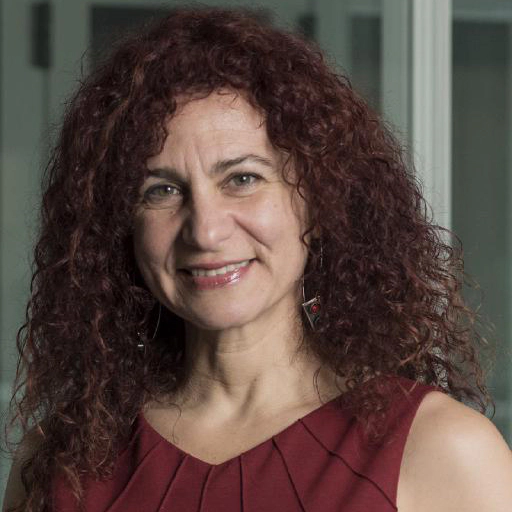
EPFL, Switzerland
anastasia.ailamaki@epfl.ch
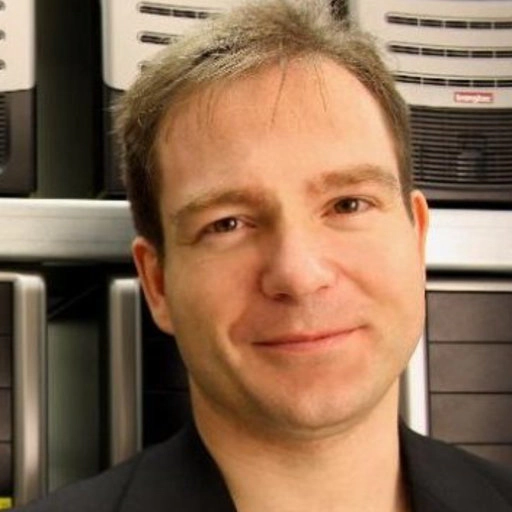
CWI, Netherlands
boncz@cwi.nl

CWI, Netherlands
stefan.manegold@cwi.nl
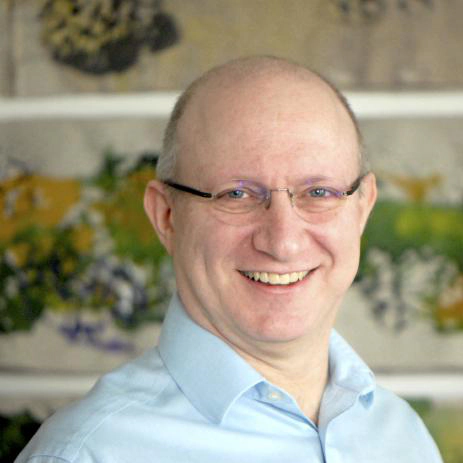
Columbia University, USA
kar@cs.columbia.edu
The Microsoft CMT service was used for managing the peer-reviewing process for this conference. This service was provided for free by Microsoft and they bore all expenses, including costs for Azure cloud services as well as for software development and support
We thank Muhammad El-Hindi for his help with setting up and maintaining the workshop webpage.